La langue maternelle
L'empreinte digitale, 2005
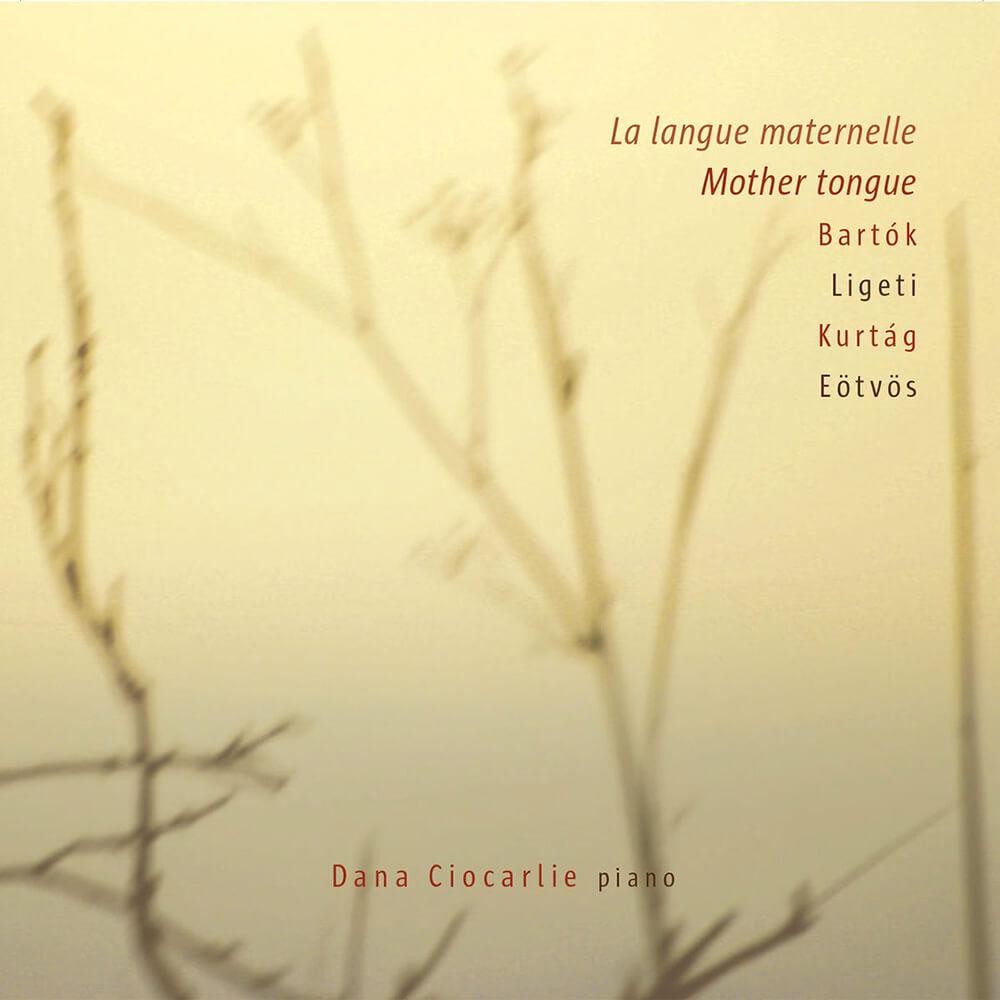
This recording offers a visit to four Hungarian composers, all born in Transylvania. Its coherence comes from the numerous references that link the works together, in a chain that originates with the music of Bartok (1881-1945). György Ligeti (born in 1923), György Kurtag (born in 1926), Peter Eötvös (born in 1944).
For Bartok, every sound is essential. He knows that even the smallest sound wave always propagates a wave of humanity. He set himself the task of transcribing the micro-rustlings of the universe. In doing so, he created a language whose vocabulary and grammar he sets out in his teaching method, Mikrokosmos. “Bartók is our mother tongue,” claim the Transylvanian composers of subsequent generations, Ligeti, Kurtag, and Eötvös.
This recording traces the beautiful lineage between the four composers and allows us to hear the liveliness of Bartok's language. Eötvös continues to transcribe the infinitely small, Ligeti re-explores the musical alphabet, and Kurtag seeks the simplest expression of his gratitude to the history of music. All three are heirs. The Romanian pianist Dana Ciocarlie, after releasing a highly acclaimed album devoted to her country's most important composers (Enescu, Constantinescu), ventured to the far reaches of Romania, to Hungarian Transylvania, to explore.
Like an encyclopedist, Bartók was a humanist. Every sound was essential to him. He knew that even the smallest sound wave always propagates a wave of humanity, a reflection of nature. This understanding of the world is the very substance of 20th-century music.
Based on this conviction, Bartók set himself the task of transcribing the micro-sounds of the universe. He thus created a language, the vocabulary and grammar of which he sets out in his teaching method, Mikrokosmos.
Bartók is our mother tongue, claim the Transylvanian composers of subsequent generations, Ligeti, Kurtág, and Eötvös. This recording traces the beautiful lineage between the four composers and allows us to hear the liveliness of Bartók's language. Eötvös continues to transcribe the infinitely small, Ligeti re-explores the musical alphabet, and Kurtág seeks the simplest expression of his gratitude to the history of music. All three have certainly inherited the Bartókian language, but they also share the same acuity to the world that could be called humility.
More than just a mother tongue, Bartók's language is universal.