Franz Schubert
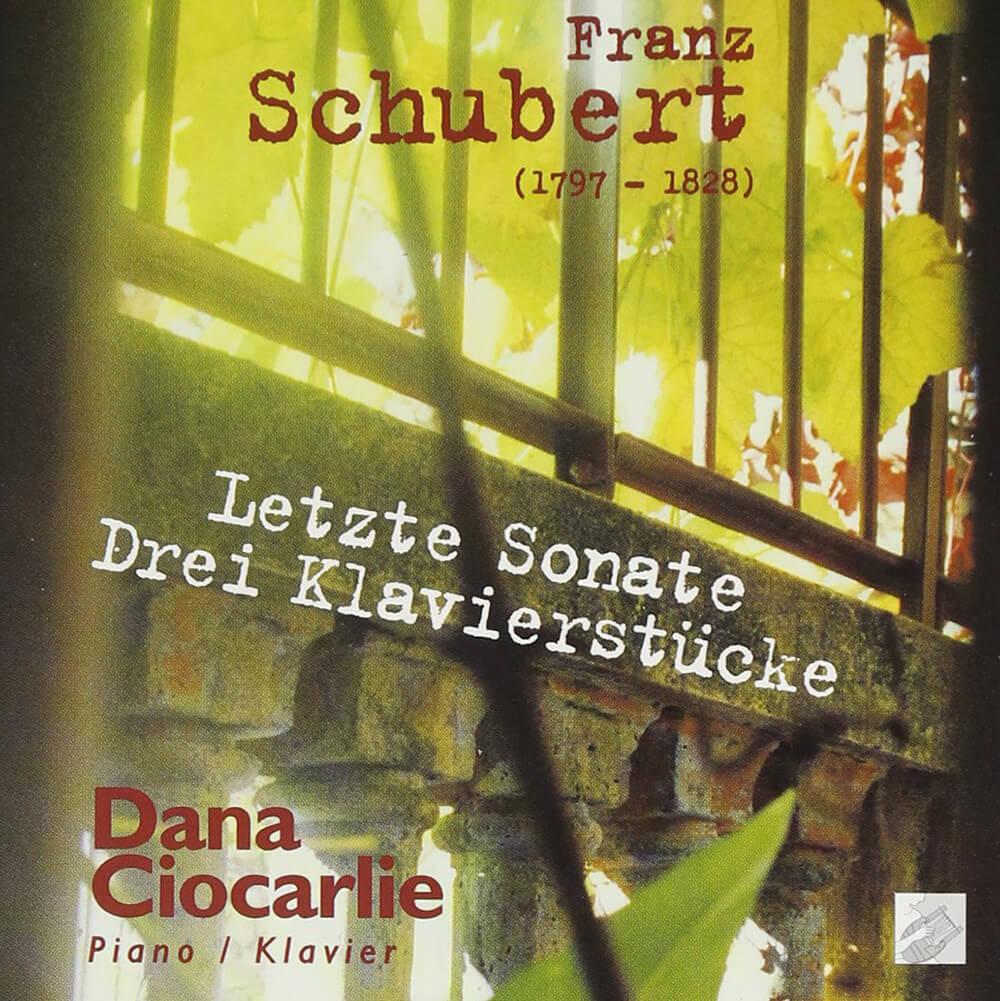
Letzte Sonate / Drei KlavierstückeL'empreinte digitale, 1997
Schubert devoted his life to the overwhelming desire to express the music he felt within him, to the point of exhaustion. He died after completing Winterreise, writing in just a few months the Great Symphony in C major, the three piano sonatas D 958, 959 and 960, the quintet with two cellos, and the lieder (grouped together after his death under the title Schwanengesang). The musician, whose symbolic season would be winter, burned himself out that year (1828) like a torch, inflamed by the urgent need to write, to depict his inner journey, the landscapes and wanderings of his soul.
Schubert is not the “almighty demiurgic” composer, but a mortal who transcends his condition through his simplicity and humanity. He is passionate and serene. He goes straight to the heart of human pain, and even beyond pain, into the realms where the forces that give us the sensation of vertigo and falling are at work. Here, space and time stand still, there are no more words and there are almost no more sounds (the end of the second movement of the Sonata in B flat). One cannot help but think of “Death and the Maiden.” After a moment of rebellion, death dispels the maiden's fears, leading her, consoling her, into a gentle sleep.
Death is everywhere. This premonition gives Schubert strength and balance, and also gives him a vision of peace, gentleness, and tranquility that are almost unbearable for us. Schubert is also someone who abandons himself to his work, who accepts not keeping a tight rein on things, not controlling everything. At times, when playing this music, we feel as if we are improvising. Sometimes the composer loses his way, sometimes he is afraid and accepts that the listener will witness his search. It is a question of recreating the vibration (when Schubert was composing, his friends said he was in a feverish trance) and sensuality. There is a particular voluptuousness in the touch of the piano, in “making” the sound, in his music, which combines the beauty and purity of the melody with harmonic richness and depth. At the beginning of Sonata D 960, the first theme rises slowly from mysterious depths to the surface of the keys, and the fingers that play merely give body and voice to this sonic presence that was already there. To play Schubert is to give flesh to this soul buried beneath the notation, to make it perceptible and palpable, to accomplish an incarnation.
- Piano Sonata D 960 in B flat major (1828)
- Drei Klavierstücke D 946 (1828)